
- Yes, you can recover damages for a Manhattan department store accident if the store’s negligence caused it. Restrooms and fitting rooms are two of the most overlooked places shoppers get hurt.
- Restroom falls usually involve water on the floor, leaking fixtures or loose grab bars. Fitting room injuries often come from wall hooks, broken benches, mirrors and clutter left by other shoppers.
- These areas have no cameras, so your own photos, the incident report and witnesses matter even more.
Most people don’t expect to get hurt shopping. Department store accidents are more common than they seem, and in big Manhattan stores, two spots get less attention than the sales floor: the restrooms and the fitting rooms. Both are areas the store controls and is supposed to inspect. A Manhattan slip and fall lawyer from the Law Offices of Richard M. Kenny can look at what the store’s staff were supposed to be checking.
What are the most common causes of a department store accident?
On the sales floor:
- Spills and broken merchandise
- Racks and displays packed into aisles. Our post on department store racks covers a Manhattan rack case.
- Torn carpet, loose mats and changes in floor level
- Escalators and elevators
In the restrooms:
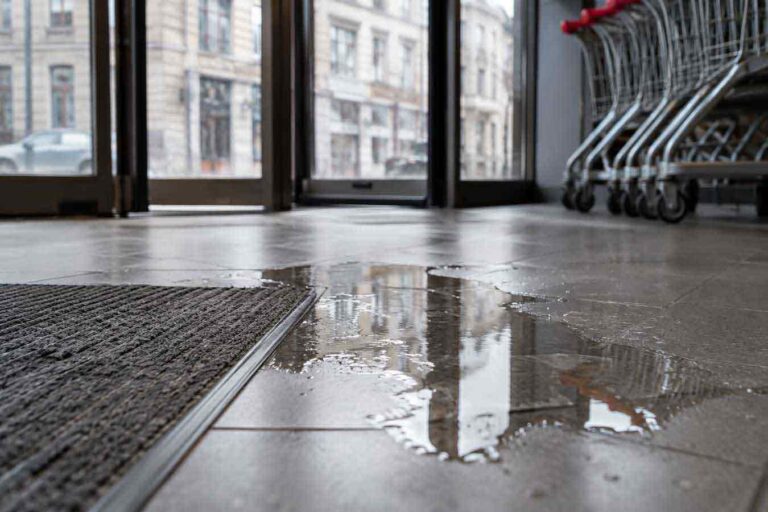
- Water from sinks, toilets and hand dryers on tile floors
- Leaking or overflowing fixtures
- Loose grab bars, broken toilet seats and doors that swing unexpectedly
- Poor lighting
In the fitting rooms:
- Wall hooks at face or eye level
- Benches and stools that collapse
- Mirrors that aren’t secured
- Hangers, pins, tags and clothes piled on the floor
- Tight spaces with a step or threshold at the door
Who Is Responsible for Restroom and Fitting Room Injuries?
Usually the store. It controls those areas and has to inspect and maintain them. Like any other area, the store is generally liable if it created the hazard or knew or should have known about it and didn’t fix it in time. Many stores keep restroom check sheets on the door, and those logs can show how long it had been since anyone looked.
For accessible restroom stalls, the federal ADA Standards require grab bars, mounted between 33 and 36 inches above the floor. A loose or missing grab bar in a store restroom is a maintenance failure that can support a claim if it caused a fall. If a store shares a building’s restrooms with other tenants, the building owner or manager may be responsible instead.
What should I do after a department store accident?
- Get medical care right away.
- Report it to a manager and ask for an incident report. Our post on store incident reports explains how.
- Photograph the hazard. In a restroom or fitting room, there’s no video, so your photos may be the only record.
- Note whether the restroom check sheet was signed, and the last time on it.
- Get names of employees and other shoppers nearby.
- Keep your receipt or card charge showing you were there.
Common Questions About Department Store Injuries
I slipped on water in the restroom. Can I sue?
Possibly. It depends on whether staff knew or should have known about the water. Our post on wet floors with no warning sign explains how those cases work.
A hook in the fitting room cut my face. Is that the store’s fault?
It can be. A hook placed at face height in a tight room, or a broken one with a sharp edge, is a condition the store controls.
What can I recover?
Medical bills, lost wages and pain and suffering, reduced by any share of fault that’s yours. A personal injury lawyer or New York City premises liability lawyer at our firm can review it for free.
If you were hurt in a Manhattan department store, The Law Offices of Richard M. Kenny can find out what the store’s staff knew.
Talk to a New York City Personal Injury Attorney
If an accident has turned your life upside down, call (212) 421-0300 or request a free case evaluation so we can help you understand your next steps.