
- Most Bronx sidewalks are the responsibility of the building next to them, but the City is responsible in some places, including in front of owner-occupied one- to three-family homes.
- To sue the City over a sidewalk defect, you generally have to show it got written notice of that defect and didn’t fix it within 15 days.
- Written notice can come from a written complaint to the Department of Transportation, an earlier claim, or a defect map filed with the City, which is why the history of that sidewalk matters.
As you may know, sidewalks are often not as well-kept as they should be. Because of this, sidewalk accidents are not at all uncommon in the Bronx. Please continue reading and reach out to our experienced Bronx personal injury attorney to learn more about sidewalk accidents and how our legal team can help if you have been injured in one. Here are some of the questions you may have:
What are the most common causes of sidewalk accidents?
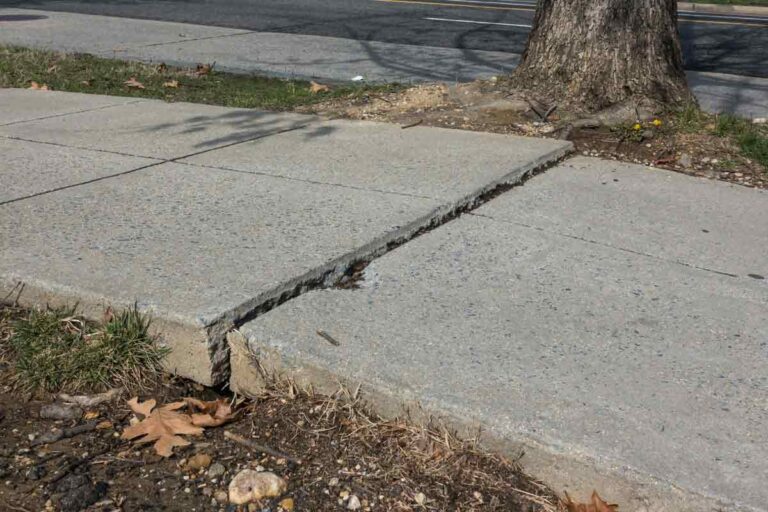
Sidewalk accidents can occur for many different reasons, though they are typically the result of negligence on the part of whoever is responsible for that stretch of sidewalk. Some of the most common causes of sidewalk accidents include broken and raised slabs, holes, tree roots lifting the concrete, loose metal plates and cellar doors, debris left uncleared, and snow and ice left on the walk. Our sidewalk slip and fall attorneys handle both private and City sidewalk claims.
Who is responsible for my accident?
It depends on where you fell. Under NYC Administrative Code § 7-210, the owner of the property next to the sidewalk is usually responsible for keeping it reasonably safe. But the City is generally responsible in some places, including:
- In front of owner-occupied one-, two- and three-family homes used only as residences
- Next to City-owned property, such as parks and many public buildings
- Some curbs, crosswalks and pedestrian ramps
NYCHA property has its own rules and short deadlines. Our post on who’s responsible for sidewalk accidents in NYC covers the private-owner side in more detail.
What is the City’s “prior written notice” rule?
It’s the biggest hurdle in a City sidewalk case. Under Administrative Code § 7-201(c)(2), you generally can’t recover from the City for a defective sidewalk unless the City received written notice of that specific defect, and then failed to repair it within 15 days. Simply showing the defect existed for a long time usually isn’t enough, and courts don’t always treat a 311 call as written notice.
Written notice can come from several places:
- A written complaint delivered to the Department of Transportation, or DOT records showing it knew about that defect
- An earlier claim or lawsuit about the same spot
- Defect maps that private groups have filed with the City for years, which New York courts have accepted as written notice
There are exceptions. The written notice rule generally doesn’t apply if the City itself created the defect through its own work, such as a botched repair, or if the City used that part of the sidewalk for its own special purpose. Pinning down the history of the exact spot where you fell is often what decides these cases.
What should I do if I’m hurt on the sidewalk?
If you are injured in a sidewalk accident, you should take several steps to document the incident. If you can, try to do the following:
- Call 911 or get medical care right away. Your health is the most important thing.
- Ask witnesses for their contact information.
- Take pictures of the defect from several angles, with something next to it to show its size, and photograph the building or house it’s in front of.
- Write down the exact address and which part of the sidewalk you fell on.
- Keep a copy of all medical documentation pertaining to your injury.
- Contact an experienced Bronx personal injury attorney who can help you find out who was responsible and whether the City had notice.
How long do I have to file?
For a claim against the City, a notice of claim is generally due within 90 days under General Municipal Law § 50-e, and a lawsuit within one year and 90 days. Claims against a private owner generally have three years under CPLR 214. Our legal team is prepared to help you today.
Common Questions About Bronx Sidewalk Falls
How do I know if the house was owner-occupied?
Public property records, voter and utility records, and simply asking neighbors can help. It often takes some digging, which is one reason to call a lawyer before the 90-day deadline runs.
What if a tree root raised the sidewalk?
Responsibility can depend on whose sidewalk it is and who knew about the damage. The City has a program to repair tree-damaged sidewalks in front of some homes, and those records can matter.
Our entire legal team is dedicated to providing the advice you need and the personalized attention you deserve. You may be entitled to financial compensation, which can help you on your road to recovery.
Speak With a New York City Injury Lawyer Today
To talk about what happened, call our office at (212) 421-0300 or request a free case evaluation online. We don’t get paid unless you do.